Use cases
Seven engagements across mining, legal, construction, retail, professional services and corporate transactions. Each began with a complex problem and fragmented information. Each ended with clearer evidence, better decisions and outcomes our clients could count.
Select any use case below to see the challenge, what we did and the results we delivered.
9×
return on investment from an ERP project remediation
~26 hrs
saved every week for a civil construction business
~94,000
documents connected to support an expert legal opinion
~5,300
mining approvals mapped end to end
The work
Click a use case to see the challenge, the approach and the outcomes.
Featured · Project remediation
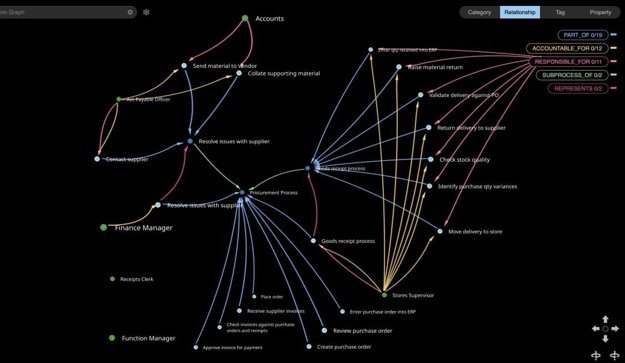
After a difficult implementation and a strained vendor relationship, we stabilised the project, completed remediation on time and on budget, and rolled out one unified platform across three subsidiaries.
Explore the use case +

Mergers and acquisitions
A navigable 3D view of 4,000 employees, 600 managers and more than 20 divisions, giving leaders clarity before the deal.
Explore the use case +
Mining · Approvals
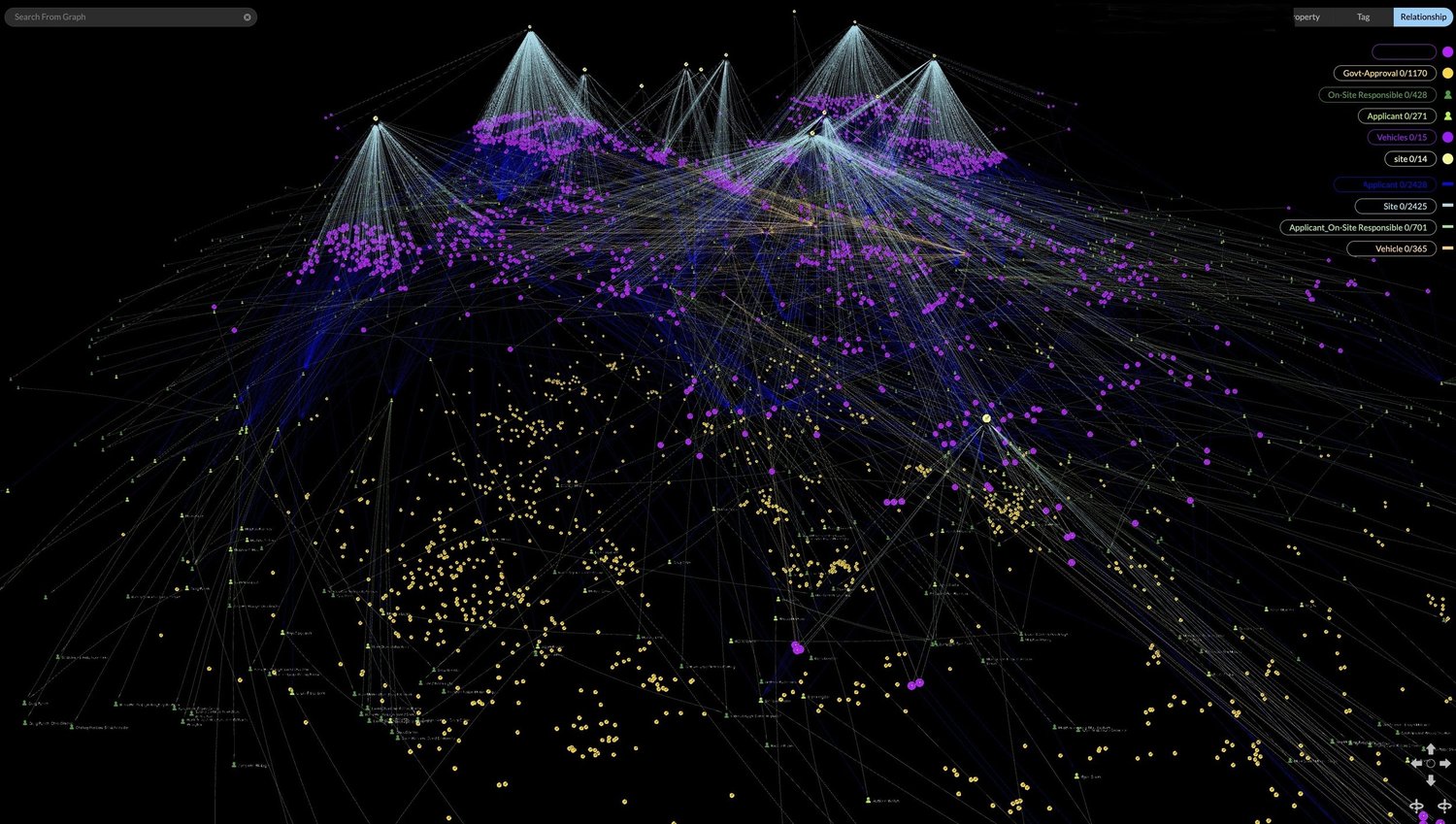
Around 5,300 approvals mapped end to end, so at-risk approvals surface early and costly delays are avoided.
Explore the use case +

Expert opinion · Legal
Around 94,000 documents connected and searchable, supporting a validated and defensible opinion.
Explore the use case +
Professional services
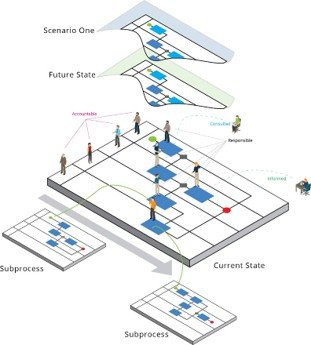
Four teams reviewed and a sharper business model delivered within a month, with less rework and better use of people.
Explore the use case +
Civil construction
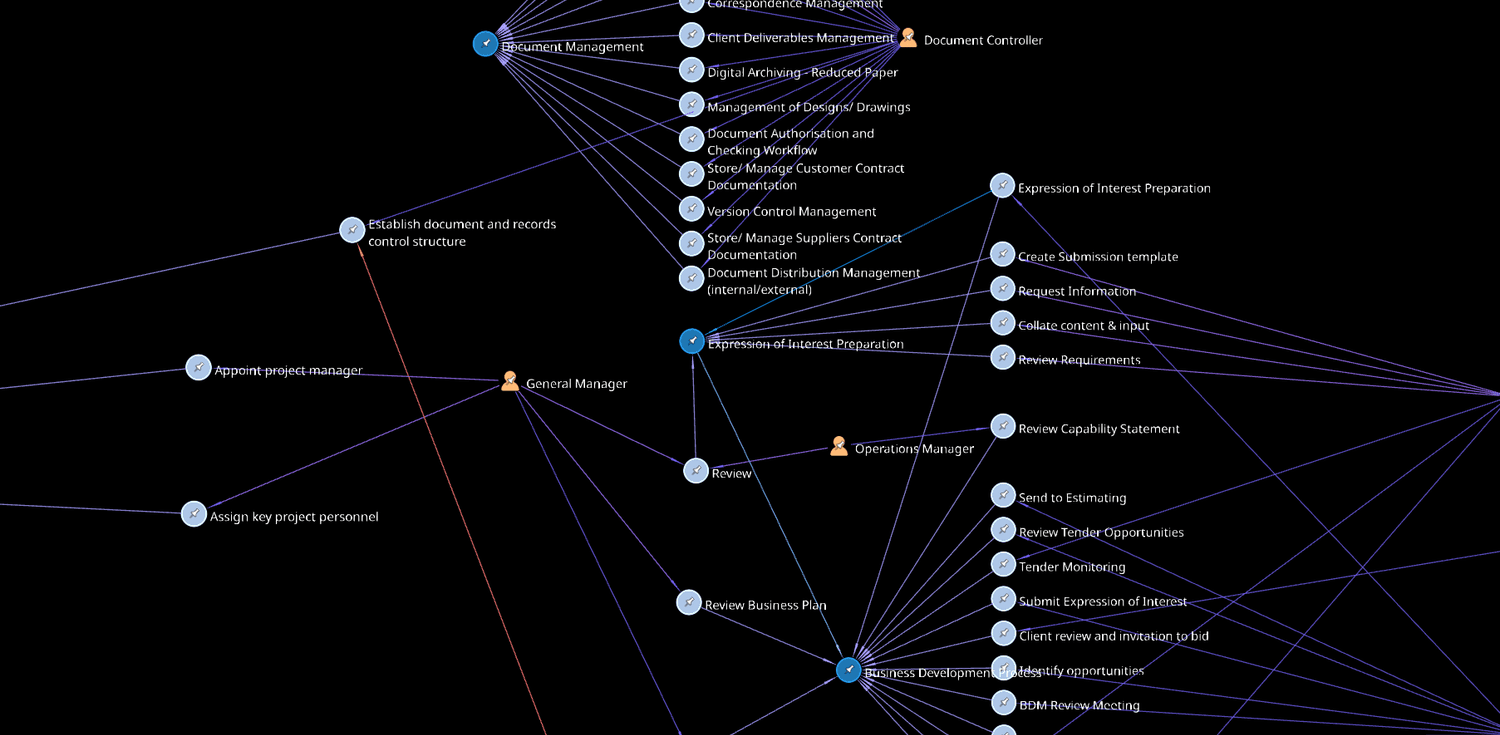
Sharper tendering and around 26 hours saved every week, achieved without reducing headcount.
Explore the use case +
Retail
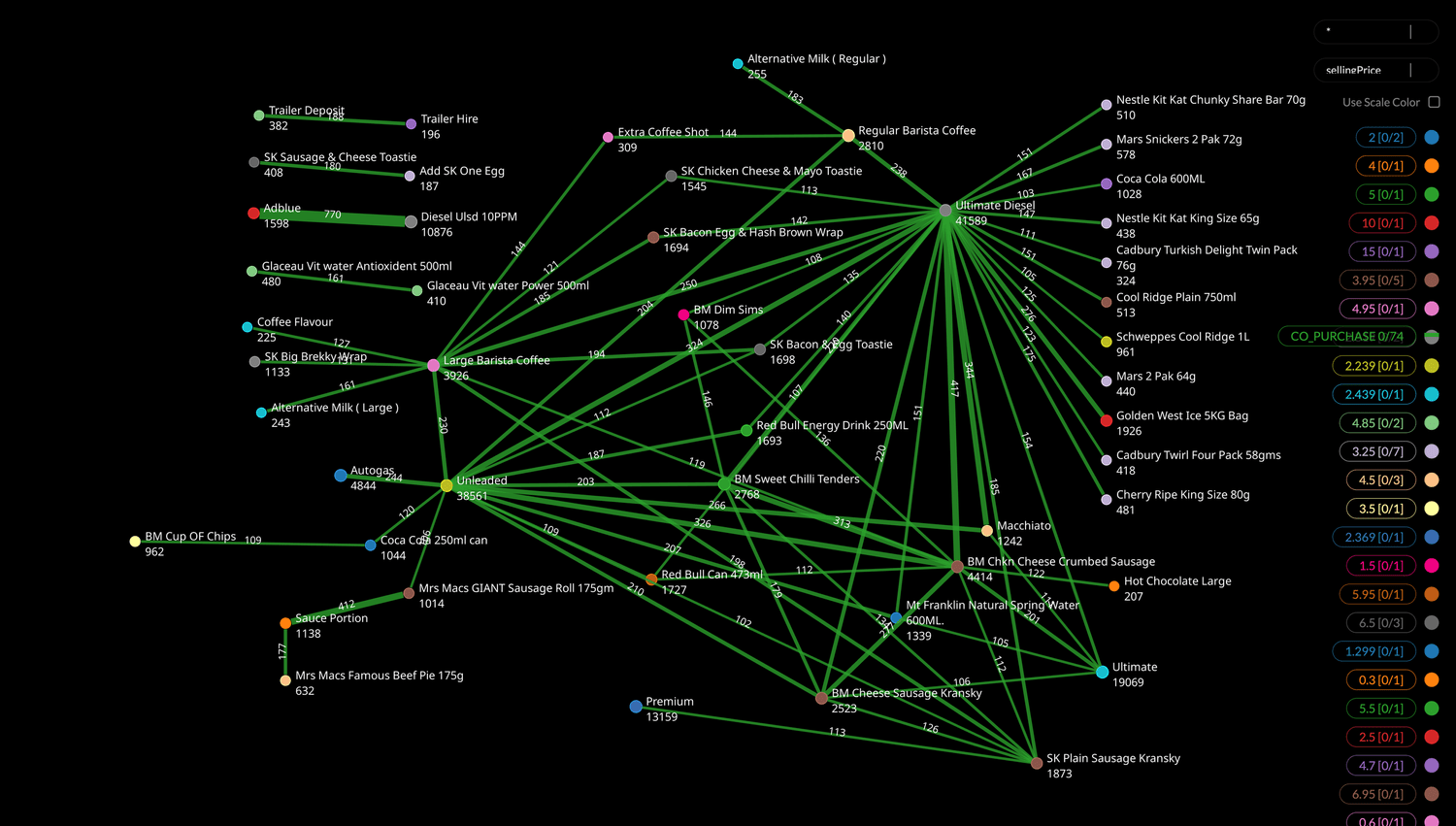
Twelve months of transactions turned into clear product relationships that now inform marketing and business development.
Explore the use case +
What you gain
01
We connect structured and unstructured data into models that reveal the relationships, dependencies and risks your reports can't show.
02
Our findings trace back to the data, so executives, boards and legal teams can act with confidence and defend their decisions.
03
From a 9× return on investment to 26 hours saved each week, we focus on outcomes that show up in time, cost and performance.
04
Focused engagements, some completed within a month, that work alongside your teams and leave them with a clearer way forward.
Start the conversation
Tell us about the problem, project or decision in front of you. We'll help you work out what needs to be understood and where to start.
Common starting points
A poor systems implementation and a strained vendor relationship left the executive team questioning the ERP project's structure, deliverables and outcomes, with further rollout to the group's subsidiary companies on hold.
We identified the issues that had to be resolved, recalibrated the project team, took on vendor management and led the remediation. With the foundations fixed, the rollout resumed across three subsidiary companies, giving the group one unified platform.
We combined integrated ERP experience with business architecture and hands-on remediation capability, so the executive team got a project that delivered rather than a report on what went wrong.
Executive team, vendors, the implementation team and a Realising Potential remediation lead.
Before completing an acquisition, leaders and their legal advisers needed to understand how the target organisation really worked, across multiple regions, more than 20 divisions, around 600 managers and 4,000 employees. The information sat in structured systems and unstructured documents that didn't tell one story.
We assessed and combined the structured and unstructured data, chose the right visualisation and built an interactive 3D model of the organisational structure. Information managers and legal representatives explored it with us, refining the answers through short feedback loops.
We turned scattered records into a model the deal team could navigate and question, giving leaders a view of the organisation that spreadsheets and organisation charts couldn't provide.
Information managers and legal representatives.
Managing tenements and the ongoing licence to operate is complex: around 5,300 approvals in play across two divisions, five operational teams, 59 internal stakeholders and more than five enterprise systems. Without a clear view of status, dependencies and ownership, delays were hard to see coming and costly when they arrived.
We brought approvals, stakeholder and site data together, modelled the end-to-end approvals process and showed who interacts with whom, where, and on which assets. We then delivered the data story with practical recommendations for leaders and operational teams.
We connected data held across multiple enterprise systems into one end-to-end view, so leaders and operational teams could see delays coming and act before they cost production.
Government, site managers, general managers and approvals teams.
A legal team needed an independent expert opinion on a matter where the evidence ran to around 94,000 documents of different sizes and file types. With high stakes, the opinion had to be thorough, traceable and defensible.
We combined subject-matter expertise with a 3D model of the document set. After assessing the quality of the material, we used targeted search, navigation and exploration to uncover relationships, duplicates and the facts that mattered, then formalised the opinion.
We paired subject-matter expertise with data modelling, so the opinion was grounded in the full body of evidence rather than a sample of it.
Legal team, barristers, plaintiff or defendant, and a subject-matter expert.
A professional services group wanted its business advisory division to be more efficient, effective and profitable, without a long and disruptive review.
Working with partners, specialists and operational teams, we defined the current process and workflow, modelled a recommended future state, assessed opportunities and risks, and presented clear recommendations, all within one month.
We brought an independent view of the practice architecture and workflow, and delivered clear, prioritised recommendations in weeks rather than months.
Partners, specialists and operational teams.
A civil construction organisation needed to win more tenders and lift operational performance without reducing employee numbers. Its data and information practices also had to work across the whole business and support growth.
We identified gaps and weaknesses, then ran 34 workshops across eight functional teams. Using process models and visualisation, we built recommendations for growth and scalability and supported their implementation.
We improved performance by working with people rather than around them, lifting tender competitiveness and efficiency without reducing headcount.
Executive team, team leads and operational teams.
A retailer's tabular reports couldn't show how its products related to one another, or what gets bought with what, leaving valuable insight locked inside its transaction data.
We took 12 months of point-of-sale history from the existing enterprise system, defined the model views and visualised the patterns, relationships and linkages. We then presented a clear data point of view and data story.
We showed what tabular reports couldn't: the relationships already in the data, turned into insight that marketing and business development could use straight away.
Solution provider, retail site management, and the research and development team.